

The Comprehensive Guide to EHR System Selection and Implementation
Selecting and implementing an EHR is one of the most consequential technology decisions healthcare leaders face. The right system affects patient care, compliance, and long-term financial performance. This EHR implementation guide offers senior executives and IT leaders a strategic blueprint, covering system selection and deployment from planning to execution. With a clear roadmap, you can reduce risk, align technology with organizational goals, and achieve lasting value.
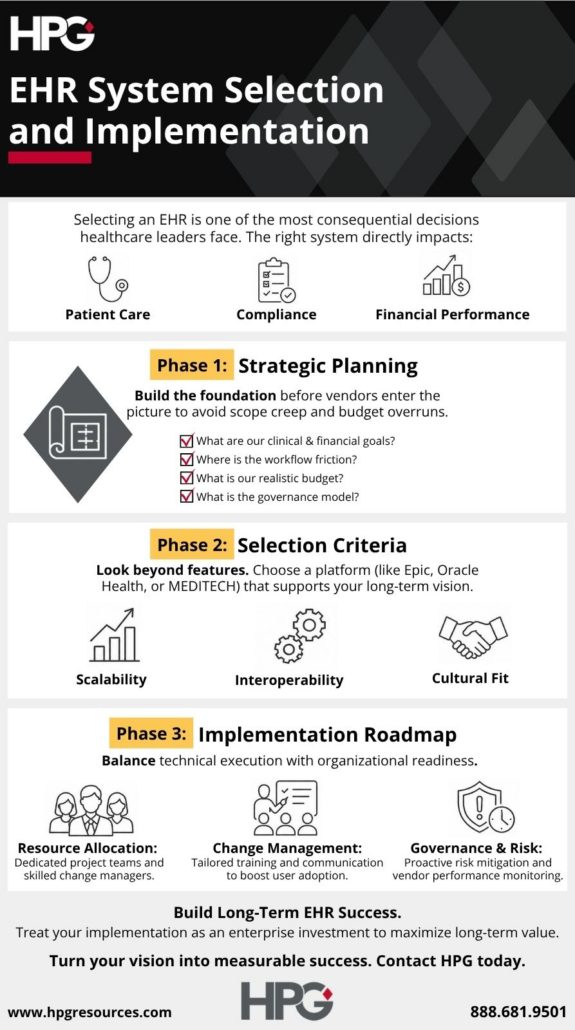
Phase 1: Strategic Planning for EHR Implementation
Before vendors enter the picture, leaders must create a foundation for success. Strategic planning ensures the EHR project aligns with long-term goals and addresses organizational pain points. Skipping this step often leads to scope creep, budget overruns, and poor adoption.
Key questions to guide the planning phase include:
- What clinical and financial outcomes do we want to achieve?
- Which existing workflows create the most friction for staff or patients?
- How much capital and operational funding can we realistically dedicate?
- What governance model will oversee the project from start to finish?
By answering these questions early, executives can align expectations, secure stakeholder buy-in, and establish a clear direction for the initiative.
HPG recently partnered with a regional health system that struggled with fragmented workflows across multiple sites. By leading a structured planning process, we helped executives prioritize clinical outcomes and align technology goals with a five-year growth plan. This early alignment avoided costly missteps and positioned the project for long-term success.
Phase 2: Criteria for EHR System Selection
Choosing the right platform goes beyond comparing features. Senior leaders must evaluate how a system fits the organization’s long-term vision, integrates with existing infrastructure, and supports clinical and financial performance. Platforms like Epic, Oracle Health, and MEDITECH dominate the market, but their suitability depends on alignment with your priorities.
For example, HPG guided a multi-hospital network through vendor selection by comparing scalability and interoperability across Epic and Oracle Health. By weighing cultural fit alongside technical requirements, leaders chose a platform that supported growth and reduced integration risks.
Evaluating Scalability and Interoperability
A strong system should scale with growth, whether you add new facilities or expand service lines. Interoperability ensures seamless data exchange with external providers, payers, and patients, improving care coordination and regulatory compliance.
Assessing Cultural Fit
Understanding how to choose an EHR system involves more than technical capability. A good cultural fit reflects your workflows, leadership style, and tolerance for change. Systems that align with organizational culture foster smoother adoption and long-term success.
Phase 3: EHR Implementation Roadmap
Even the top system fails without a straightforward EHR implementation process. Leaders need a structured approach that balances technical execution with organizational readiness. A successful roadmap defines timelines, allocates resources, and prepares staff for lasting change. It also sets performance benchmarks so executives can measure progress and adjust strategies.
Resource Allocation and Change Management
Electronic health record implementation requires dedicated project teams and skilled change managers. Training programs, user support, and communication channels reduce resistance and help staff adapt quickly. Prioritizing people alongside technology creates momentum and builds confidence across the organization.
In one community hospital project, HPG designed tailored training programs and governance structures that kept staff engaged. The result was a rapid implementation delivered on time and within budget, with staff adoption rates exceeding initial targets.
Governance and Risk Mitigation
Strong governance keeps projects on track. Leaders should establish committees to oversee scope, budget, and compliance. Proactive risk management, including contingency planning and vendor performance monitoring, ensures the EHR project plan adapts to challenges while maintaining alignment with organizational goals.
Building Long-Term EHR Success
Practical EHR projects demand strategic planning, careful EHR system selection, and disciplined execution. When leaders treat implementation as an enterprise investment, they reduce risk and maximize long-term value. HPG Resources collaborates with executives to design and deliver strategies aligning technology with organizational goals.
Contact us at HPG Resources today for guidance that turns vision into measurable success.
Image credit: EliteExposure / Shutterstock

